
Wisconsin Tick Testing Service
Professional tick testing for Lyme Disease and other tick-borne pathogens.
Is Lyme disease common in Wisconsin?
Yes. Wisconsin is a high-risk state for Lyme disease, which is primarily transmitted by deer (blacklegged) ticks. Ticks are active throughout the year, so tick testing can help assess disease exposure after a bite and support informed next steps.
Should I get a tick from Wisconsin tested for disease?
Yes, several tick species found in Wisconsin carry diseases. Deer ticks are associated with Lyme disease, anaplasmosis, babesiosis, relapsing fever, Powassan virus, and Ehrlichia. American Dog ticks are linked to Rocky Mountain spotted fever, tularemia, and can also cause tick paralysis. Lone Star ticks have increased in Wisconsin, and are associated with alpha-gal syndrome, STARI, ehrlichiosis, tularemia, and Borrelia lonestari. Cases of Heartland virus and Bourbon virus have been linked to tick exposure as well. Symptoms may not appear immediately after a tick bite, so prompt tick testing can help with medical decision-making.
Our testing Services:
Ticknology offers a comprehensive Universal Tick Test and tick identification services to help assess your risk for Lyme disease and other tick-borne diseases in Wisconsin. Our services include testing for:
- Lyme disease
- Borreliosis
- Bartonella species
- Borrelia miyamotoi
- Borrelia mayonii
- Anaplasmosis
- Babesiosis
- Rocky Mountain spotted fever
- Spotted Fever Rickettsiosis
- Tularemia
- Ehrlichiosis
Wisconsin Ticks and Risks
Tick species and disease risks vary by region. Wisconsin contains several tick species, the most common of which are Deer ticks, American Dog ticks, and Lone Star ticks. Each of these species can carry disease - for example, Deer ticks are the primary carriers of Lyme Disease. Ticknology’s nationwide comprehensive tick testing and identification services are designed to quickly and accurately assess the infectious status of any tick found, regardless of origin location or species.
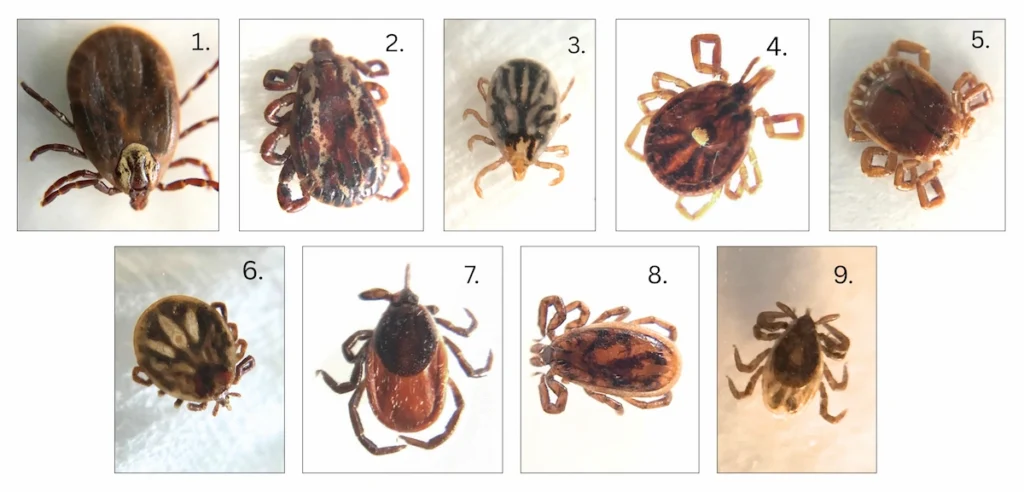
The above image shows examples of females, males, and nymphal American Dog, Lone Star, and Deer ticks.
The list below serves as an image key to identify the ticks by stage/sex and species.
1 - Female American Dog Tick
2 - Male American Dog Tick
3 - Nymphal American Dog Tick
4 - Female Lone Star Tick
5 - Male Lone Star Tick
6 - Nymphal Lone Star Tick
7 - Female Deer Tick
8 - Male Deer Tick
9 - Nymphal Deer Tick
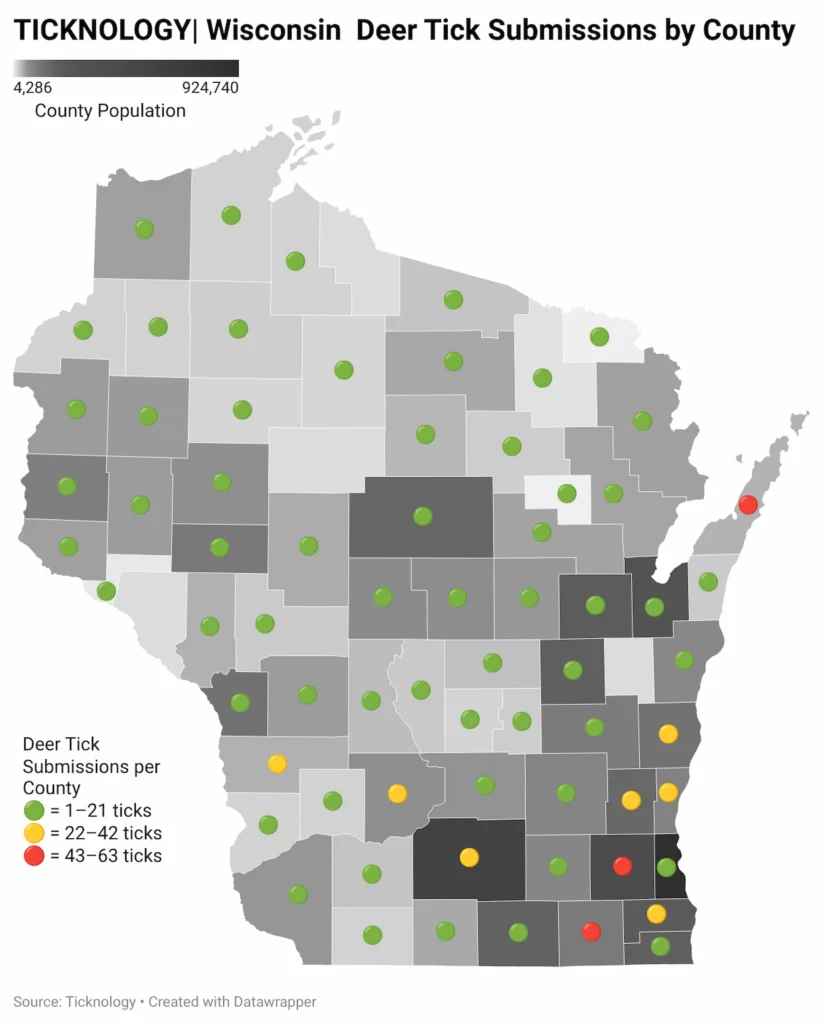
The map above shows distribution of Deer ticks across Wisconsin, based on tick testing submissions. When viewing this, it's important to remember this map reflects the frequency of tick encounters and subsequent tick testing, rather than the true population distribution of Deer ticks in Wisconsin.

Wisconsin Tick Species Abundance and Activity
Disease risk and frequency of bites change throughout the year due to changes in tick activity. Different species also carry different diseases, so it's important to understand how the risks change throughout the year. The figures below show the tick testing submissions of the three most commonly encountered Wisconsin species (pie chart), and their activity throughout the year (area graph). Together, these figures aim to help Wisconsin citizens understand when prevention and tick testing is most critical.
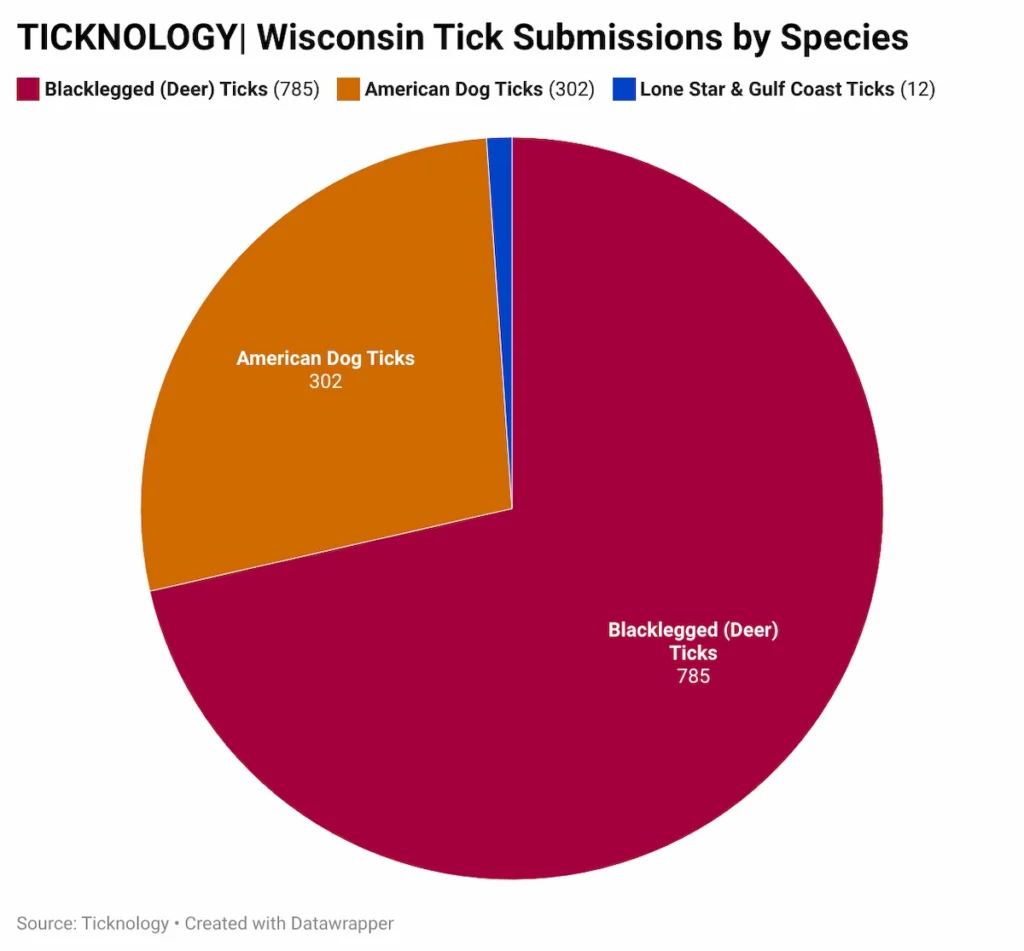
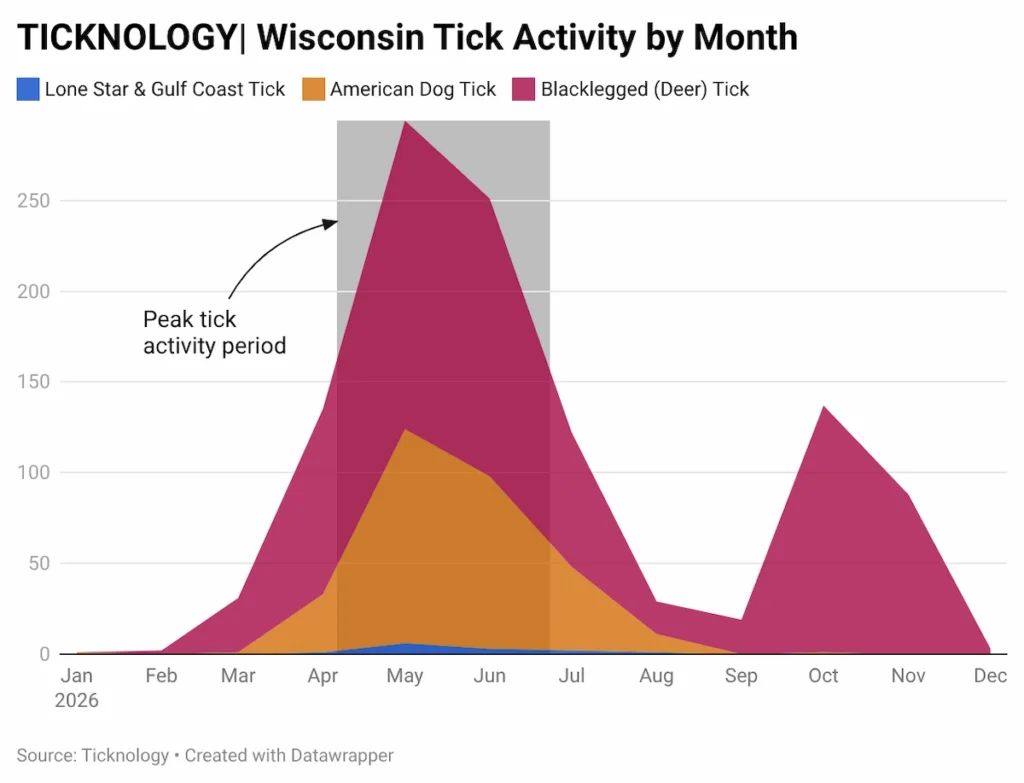
Note how the most commonly encountered ticks are Deer ticks, which are the primary carriers of Lyme Disease. American Dog ticks are second, and carry other diseases such as Tularemia. Coming in third, Lone Star ticks are particularly known to transmit Ehrlichiosis, among other risks. Another important note is how Deer ticks have two activity peaks, and are found throughout the year. American Dog and Lone Star ticks' activity peaks with Deer ticks in the summer, thus making it the riskiest time for tick-borne diseases.
Lyme Disease and Tick-Borne Illnesses in Wisconsin - Monitoring and Prevention
Borrelia burgdorferi, the bacterium that causes Lyme disease, has been detected in Deer ticks across Wisconsin. Higher detection rates are seen in southern and eastern Wisconsin. This widespread distribution reinforces the need for tick awareness, testing, and prevention to reduce the risk of Lyme disease and other tick-borne illnesses in Wisconsin. Additionally, Deer ticks are known to carry other tick-borne pathogens, including Anaplasma phagocytophilum (anaplasmosis), Babesia species (babesiosis), and Borrelia miyamotoi (hard tick-borne relapsing fever). These pathogens may occur alone or as co-infections, increasing the complexity of tick-borne diseases.
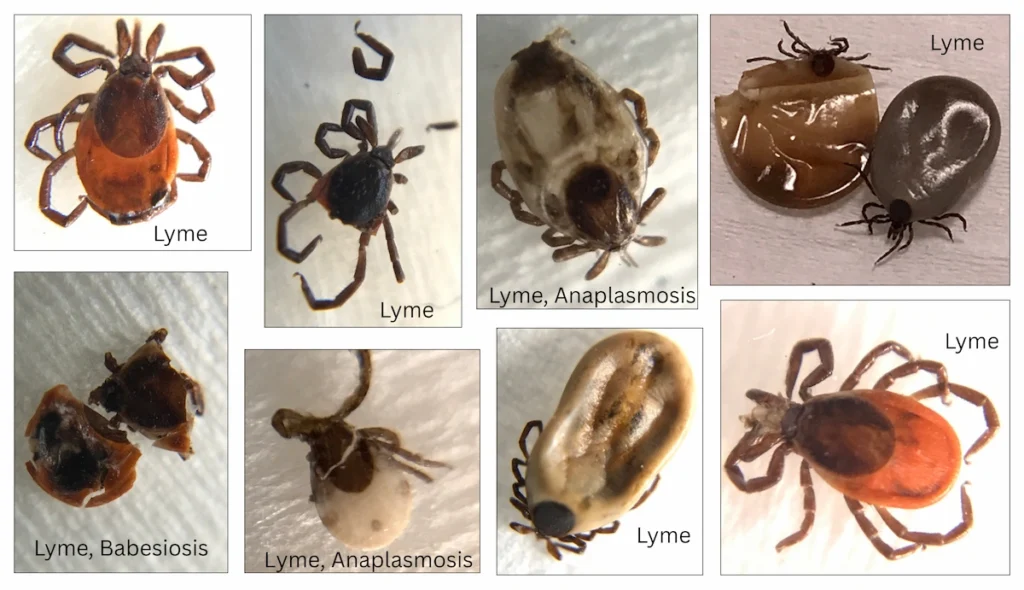
All ticks shown above were found in Wisconsin, tested by Ticknology, and found to be Lyme Disease positive. Several also had Anaplasmosis or Babesia pathogens as well - the images are labelled with which pathogens were found in each tick.
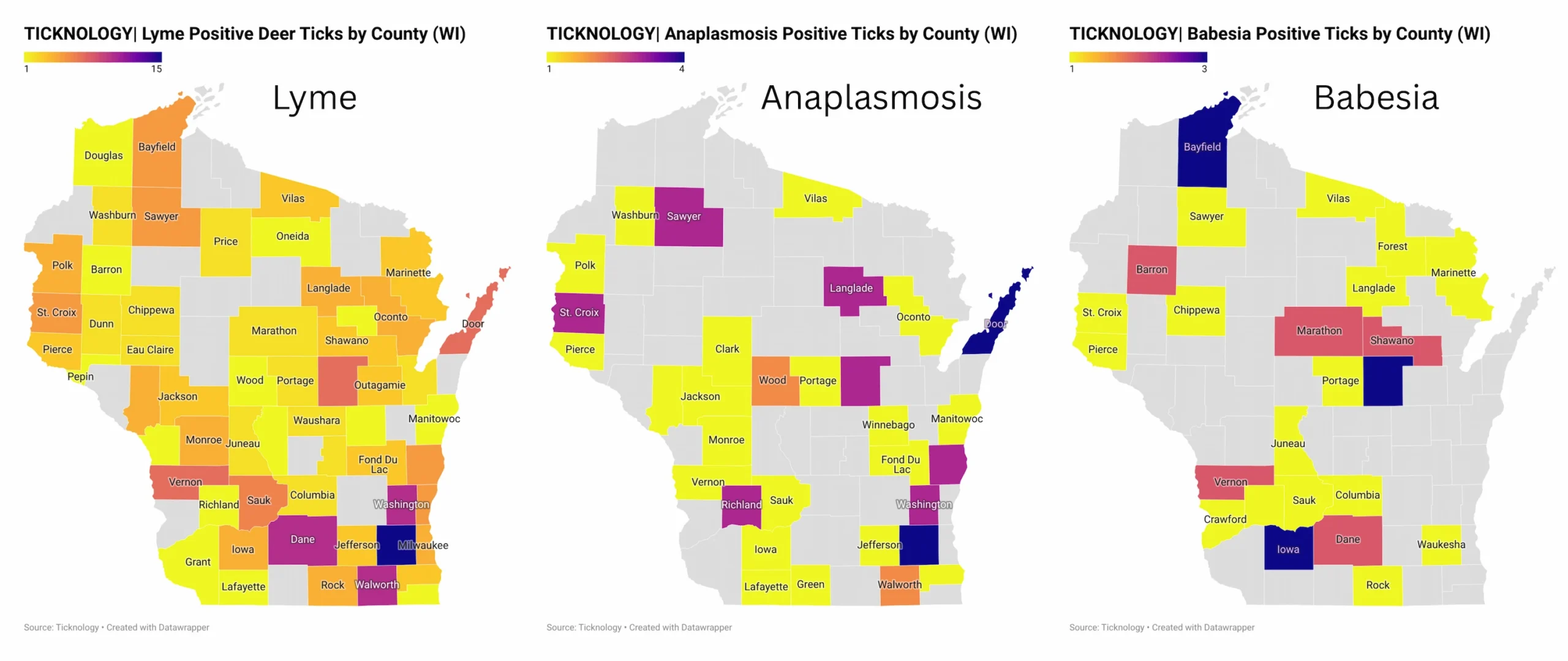
This map shows county-level distribution of ticks positive for Lyme Disease, Anaplasmosis, and Babesia submitted to Ticknology. Those living in higher risk areas should prioritize tick testing to better potential health outcomes.
The image below displays eight ticks submitted from Wisconsin, all of which were found to carry the Anaplasma phagocytophilum bacteria.
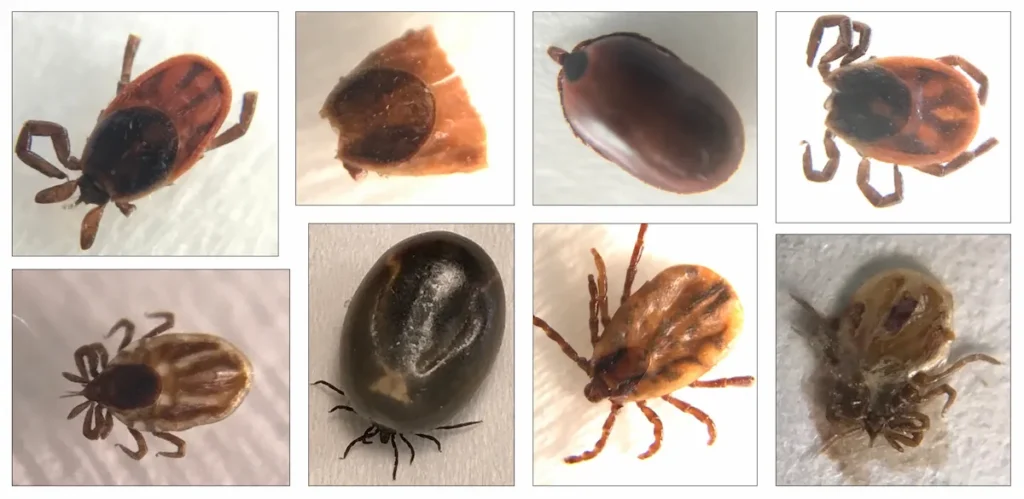
Anaplasmosis (Anaplasma phagocytophilum)
Anaplasmosis is bacterial infectious disease most commonly transmitted through Deer ticks in Wisconsin. Ticknology has found one rare instance of Anaplasmosis bacteria in a female Winter tick (Dermacentor albipictus (box 7))) from Manitowoc County, WI.
Common symptoms of Anaplasmosis:
- Fever, chills
- Severe headache
- Muscle aches
- Nausea, vomiting, diarrhea, loss of appetite
Click to learn more: CDC Anaplasmosis
The image below displays six ticks submitted from Wisconsin, all of which were found to carry the Babesia microti parasite.

Babesiosis (Babesia microti)
Babesiosis a parasitic disease, most commonly transmitted by the Deer tick in Wisconsin. Babesia parasites infect red blood cells and can cause illness ranging from mild to severe.
Common symptoms of Babesiosis:
-
Fever and chills
-
Fatigue or weakness
-
Sweats
-
Headache
-
Muscle and joint aches
-
Nausea
Click to learn more: CDC Babesiosis
Hard Tick-borne Relapsing Fever (HTRF)
Hard tick-borne relapsing fever is a rare, bacterial disease caused by Borrelia miyamotoi. It is carried by hard-bodied ticks, with the Deer tick being the primary carrier in Wisconsin. It can be difficult to clinically diagnose a HTRF infection, as few human blood tests are available. Difficulty with clinical diagnoses is why tick testing is so important, as it can eliminate the need for blood testing, and expedite treatment.
Common symptoms of HTRF are flu-like, and include:
- Fever
- Chills or shakes
- Severe headache
- Upset stomach and digestive issues
- Muscle and joint pain
- Long-lasting fatigue
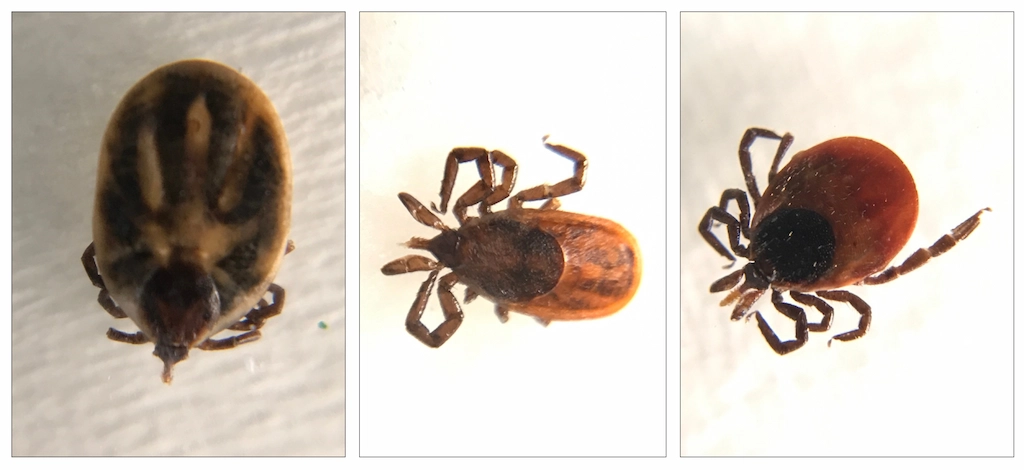
The image above displays three ticks submitted from Wisconsin, all of which were found to carry Borrelia miyamotoi bacteria.
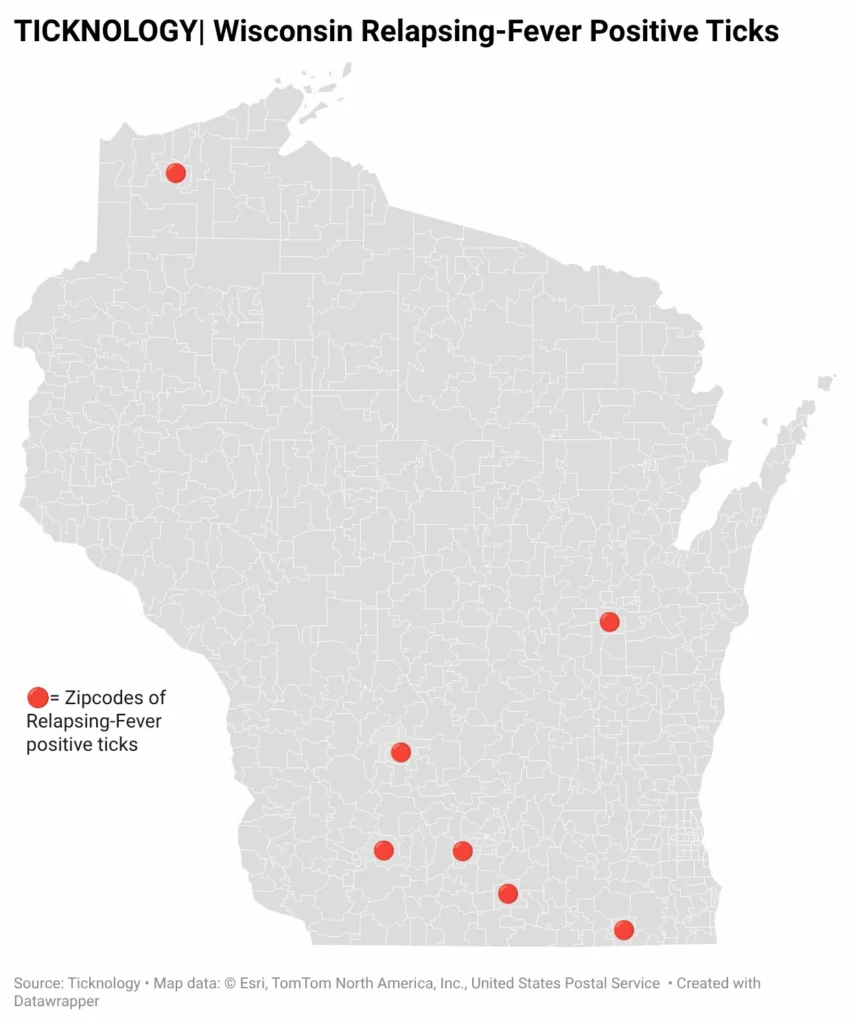
The map above illustrates zipcodes where ticks carrying Borrelia miyamotoi bacteria originated from in Wisconsin.
The image below displays an Orthithodoros tick submitted from Wisconsin.
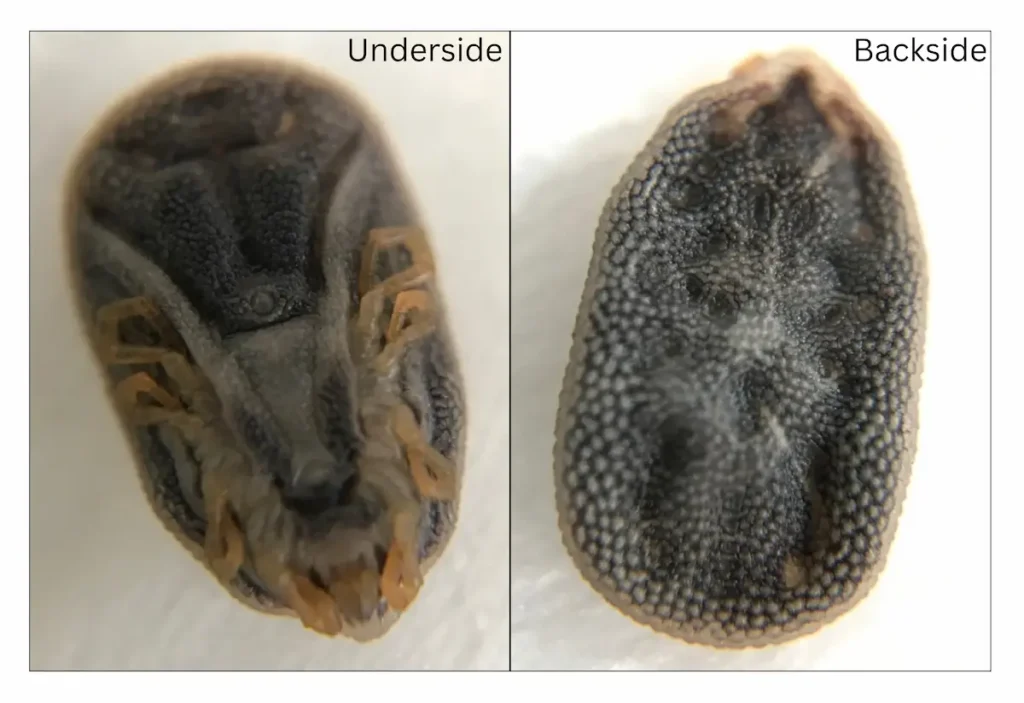
Soft Ticks (Ornithodoros species)
Soft ticks (genus Ornithodoros) differ significantly from the hard ticks (family Ixodidae) commonly encountered in Wisconsin, and are extremely rare. There are significant visual and activity differences between soft and hard ticks. For example, soft ticks feed transiently - similar to bed bugs, they become active and feed at night, often on sleeping hosts. Thankfully, they primarily feed on rodent hosts, and are not common in urban areas. However, once introduced to a human habitation, they will form nests and feed off any humans or animals nearby. Soft ticks may carry soft tick relapsing fever (STRF), which is similar to HTRF. In Wisconsin, soft ticks are not commonly encountered, and established populations are not known to be widespread, however they still may be encountered. The vast majority of tick exposures and tick-borne diseases in Wisconsin are associated with hard ticks such as Deer ticks.
Click here to learn more: CDC Soft-Tick Relapsing Fever
Universal Tick Test
One Test
3 Easy Steps
$60 -Results in 48-72 hr
$40 -Results in 3-5 days
Tick DNA test includes:
- Lyme disease
- Borreliosis
- Bartonella species (* $10 option at checkout)
- Borrelia miyamotoi
- Borrelia mayonii
- Anaplasmosis
- Babesiosis
- Rocky Mountain spotted fever
- Spotted Fever Rickettsiosis
- Tularemia
- Ehrlichiosis
*All Borrelia (Lyme) tests are repeated at no extra charge.
*Every sample is saved for 1 year in the event that additional tick DNA testing is necessary.
*Results are emailed to you within our guaranteed processing time.
Tick Testing in 3 Easy Steps

Step 1
Save your tick in a plastic bag.

Step 2
Order your test online.
Step 3
Send it to our lab.
SOS! If you or a family member have been bitten by a tick, testing it for Lyme and other tick-borne diseases may aid in immediate medical decisions. It’s easy! Simply remove and save your tick in a Ziploc bag, order a Universal Tick Test online and then send us your specimen using supplies from home.
Satisfaction Guarantee
99.9% accurate tick DNA testing | Free tick identification & image | Confirmation email of specimen arrival | Your results are reviewed by a Ph.D. level scientist | All tick species are tested for Lyme disease & co-infections
Customer Feedback
"Highly satisfied with your service! Thank you so much! Used it twice already." - S.V. Aug., 2024
"Wonderful. My family and I are so happy we found Ticknology. As someone with chronic Lyme disease, I am constantly worried about ticks in our backyard. Ticknology has come through a few times now...." B.F. April, 2024
"Very pleased with the service. Response time was great, communication via email was very prompt and on schedule, would use this service again if needed. Thank you so much." -M.L. Feb., 2024
"I’m glad we used this for peace of mind. It was very easy to do and the results were quick." -M.E. June, 2024
Questions?
Please contact Ticknology. We will respond within 24 hours.